


Why a 99% Purity Claim Is Not Enough
A "99% purity" claim on a peptide product usually refers to HPLC area purity - the proportion of the main peak relative to all detectable peaks under a specified chromatographic method. This is an important quality indicator, but it is not sufficient on its own to establish the overall quality of a leuprorelin powder batch.
HPLC area purity does not equal actual peptide content. It does not account for water, counter-ions, residual salts or some process-related non-peptide components. A batch with 99% HPLC purity may still have a materially lower actual peptide content if water or counter-ion mass is significant.
A complete quality evaluation must combine HPLC purity with other analytical results, including LC-MS identity, peptide assay, water content, counter-ion testing and related-impurity data. Each test measures a different attribute, and none should be used as a standalone proxy for overall quality.
Step 1-Confirm the Product Identity
Before reviewing any analytical data, confirm that the product identity is clearly and consistently documented. For leuprorelin, the following identity attributes should be verified:
- Product name: Leuprorelin
- Alternative name: Leuprolide (USAN)
- CAS number: 53714-56-0 (for the free peptide)
- Molecular formula: C59H84N16O12
- Molecular weight: approximately 1209.4 g/mol
- Full sequence: Pyr-His-Trp-Ser-Tyr-D-Leu-Leu-Arg-Pro-NHEt
- D-Leu at position 6: a defining structural feature requiring stereochemical confirmation
- N-terminal pyroglutamyl (Pyr/pGlu): a conserved structural feature
- C-terminal ethylamide (Pro-NHEt): a defining terminal modification
These attributes should be consistent across the product specification, COA and supporting analytical reports. Any inconsistency - such as a product name that does not match the CAS number or molecular formula - should be clarified with the supplier before proceeding.
Step 2-Review the LC-MS Report
LC-MS (liquid chromatography-mass spectrometry) provides molecular-mass evidence that supports the identity of the peptide. When reviewing an LC-MS report, check that it includes:
- Theoretical vs. measured molecular mass: the measured mass should be consistent with the theoretical mass expected for the stated leuprorelin form under the analytical method
- Principal multi-charge ions: the observed charge-state distribution should be appropriate for the peptide and ionization conditions
- Sample name and batch number: the report should clearly identify the tested material and batch
- Test date: the analysis date should be documented
- Consistency with COA: the LC-MS result should be consistent with the identity information reported on the COA
It is important to note that LC-MS primarily supports identity assessment. It does not by itself establish purity, peptide content or complete stereochemical correctness. Intact molecular mass alone cannot distinguish stereoisomers such as D-Leu from L-Leu, because stereoisomers share the same nominal molecular mass. Appropriate orthogonal or stereochemical methods are required when stereochemical confirmation is critical.
For acetate salt forms, the acetate counter-ion should be characterized separately using an appropriate method rather than inferred from intact-mass LC-MS alone.
Step 3-Interpret HPLC Purity Correctly
HPLC (high-performance liquid chromatography) is the standard method for assessing chromatographic purity. When reviewing an HPLC report, verify that it includes:
- Main peak: the principal peptide peak should be clearly identified
- Retention time: the main peak retention time should be documented and consistent with the method
- Detection wavelength: the wavelength should be stated in the analytical method and appropriate for the validated peptide method
- Column and gradient: the column and gradient conditions should be documented in the method or supporting report
- Integration: the integration method should be documented and applied consistently
- Total impurities: the total impurity percentage should be reported
- Largest single impurity: the largest individual impurity should be identified or quantified where required by the specification
- Batch number: the chromatogram should correspond to the specific batch being evaluated
A supplier that provides only a cropped image of the main peak - without the full chromatogram showing impurity peaks, retention time and integration details - is providing limited verifiable evidence. Buyers should request the full chromatogram or supporting analytical report when additional verification is required.
Step 4-Separate Purity from Actual Peptide Content
HPLC purity and peptide content measure different attributes and should not be used interchangeably. The following table summarizes the key tests and what each measures:
| Test | What It Measures |
|---|---|
| HPLC purity | Relative chromatographic main-peak area |
| LC-MS | Molecular identity |
| Peptide assay | Actual target-peptide content on a stated basis |
| Water content | Moisture in the sample |
| Counter-ion analysis | Acetate, TFA or another counter-ion |
| Residual TFA | Trifluoroacetate remaining from purification |
| Related impurities | Truncated, deleted or modified peptides |
| Residual solvents | Solvents remaining from production |
For quantitative work, the required raw-material amount should be calculated from the actual peptide assay, not from HPLC purity alone. A batch with high HPLC purity can still have a materially lower peptide-content value because water, counter-ions and other non-peptide mass are not represented by HPLC area purity.
Step 5-Check the Counter-Ion Status
Even when a product is sold under the free-peptide identity (CAS 53714-56-0), buyers should verify the actual counter-ion status of the supplied powder. Key questions include:
- Does the actual powder contain acetate, TFA or another counter-ion?
- Is the counter-ion content documented on the COA?
- Is peptide content reported on a net-peptide, dry-basis or as-is basis?
- Is the product name consistent with the reported assay basis?
It is important not to assume that a product listed under CAS 53714-56-0 is completely free of any counter-ion. The CAS number identifies the referenced chemical form, but the actual supplied powder may contain residual counter-ions from synthesis or purification. Buyers should request counter-ion analysis where this attribute is relevant to the specification.
For products explicitly supplied as leuprorelin acetate (CAS 74381-53-6), the acetate content should be documented separately, and the assay basis should be clearly stated.
Step 6-Review Related Peptide Impurities
Related peptide impurities can arise from synthesis, purification or storage. For leuprorelin, buyers should be aware of potential impurity categories including:
- Deletion peptides: peptides missing one or more amino acid residues
- Truncated peptides: peptides with incomplete sequence length
- Oxidized species: oxidation-related degradation products
- Deamidated or modified species: modifications to amino acid side chains or terminal groups
- Incorrect terminal modifications: products with wrong N-terminal or C-terminal modifications
- Synthesis-related side products: byproducts from the synthesis process
The specific impurity limits must be based on the supplier's actual quality specification and batch-specific analytical data. This article does not specify impurity limits, as these should be determined by the supplier's validated methods and agreed between buyer and supplier. Buyers should request related-impurity data where this is a required quality attribute.
Step 7-Cross-Check the COA
The certificate of analysis (COA) is the primary summary document for a batch. A COA should include:
- Product name: clearly identifying the supplied material
- Batch number: unique identifier for the batch
- Manufacturing date: date of manufacture
- Retest or expiry date: assigned retest or expiration date where applicable
- Specification: the applicable acceptance criteria for each test
- Actual result: the measured result for each test
- Test method: the method or method reference used for each analysis
- Authorized approval: appropriate issuance or approval controls
Most importantly, the COA, HPLC chromatogram and LC-MS report must all correspond to the same batch number. Buyers should verify that the batch number on the COA matches the batch number on the supporting HPLC and LC-MS data and the product label. A supplier that reuses generic documentation across multiple batches is not providing verifiable batch-specific quality data
Step 8-Do Not Confuse High Purity with Sterility
High HPLC purity does not establish sterility. The following distinctions are important:
- High HPLC purity does not mean sterile: chromatographic purity measures impurity profile, not microbial quality
- Endotoxin testing is not the same as sterility testing: endotoxin results do not demonstrate that a material is sterile
- Research grade does not mean injectable grade: research-grade material is intended for laboratory use and should not be assumed suitable for parenteral use
- Bulk powder is not a finished injection: bulk research powder is not a formulated, sterile finished drug product
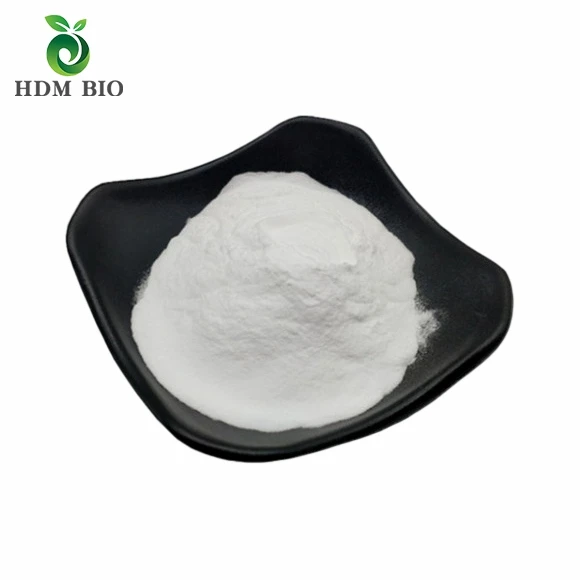
- Powder appearance cannot prove pharmaceutical compliance: visual appearance alone does not establish quality, safety or regulatory status
Bulk leuprorelin research powder should not be represented as sterile, injectable or suitable for human administration without the corresponding quality and regulatory framework.
Leuprorelin Supplier Qualification Checklist
Use this 10-point checklist when evaluating leuprorelin powder suppliers:
1. Confirm the exact chemical name (Leuprorelin / Leuprolide)
2. Verify CAS 53714-56-0 for the free peptide
3. Check the complete modified sequence, including D-Leu, Pyr and Pro-NHEt
4. Review batch-specific LC-MS identity data
5. Examine the full HPLC chromatogram, not just a cropped main peak
6. Compare HPLC purity with peptide assay (content)
7. Review water and counter-ion results
8. Check related peptide impurity data where required
9. Match all documents (COA, HPLC, LC-MS, label) to one batch number
10. Confirm storage conditions, traceability and intended use
FAQ
Does 99% HPLC mean 99% Leuprorelin content?
No. HPLC area purity measures the proportion of the main peak relative to detectable impurities under a specified method. It does not account for water, counter-ions or other non-peptide mass. Actual peptide content (assay) is a separate measurement that determines the amount of target peptide in the sample. For quantitative work, use the peptide assay, not HPLC purity alone.
How does LC-MS confirm Leuprorelin identity?
LC-MS provides molecular-mass evidence by comparing the measured mass with the theoretical mass expected for the stated leuprorelin form. It supports identity assessment but does not by itself establish purity, peptide content or complete stereochemical correctness. Intact mass alone cannot distinguish D-Leu from L-Leu because stereoisomers share the same nominal molecular mass.
Why should counter-ions be tested?
Counter-ion content affects the total powder weight and the amount of active peptide per gram of supplied material. Even products listed under the free-peptide CAS may contain residual acetate, TFA or other counter-ions from synthesis or purification. Counter-ion testing ensures that the product name, assay basis and actual composition are consistent.
What should a Leuprorelin COA contain?
A COA should identify the product name, batch number, manufacturing date, retest or expiry date (where applicable), specification, actual result, test method and appropriate approval controls. Most importantly, the COA should correspond to the same batch number as the supporting HPLC chromatogram, LC-MS report and product label.
Does high purity mean the material is sterile?
No. High HPLC purity does not establish sterility, endotoxin control or suitability for injectable use. Research-grade material is intended for laboratory use and should not be assumed to be sterile or injectable. Sterility and endotoxin status must be supported by explicit specifications and batch-specific test results.
How can buyers compare different suppliers?
Buyers should compare suppliers on the basis of consistent, batch-specific analytical documentation rather than a single purity number. Key comparison points include: product identity consistency (name, CAS, sequence, terminal form), LC-MS identity data, full HPLC chromatograms, peptide assay vs. HPLC purity, water and counter-ion content, related-impurity data, batch traceability and storage documentation. Suppliers that provide complete, batch-specific documentation enable more meaningful comparison than those that report only a generic purity claim.
References
1. PubChem – Leuprolide / Leuprorelin. Synthetic nonapeptide GnRH agonist analogue. CAS 53714-56-0, C59H84N16O12, MW 1209.4. https://pubchem.ncbi.nlm.nih.gov/compound/657181
2. ICH Q6A – Specifications: Test Procedures and Acceptance Criteria for New Drug Substances and New Drug Products. International Council for Harmonisation. https://www.ich.org/page/quality-guidelines
3. ICH Q2(R2) – Validation of Analytical Procedures. International Council for Harmonisation. https://www.ich.org/page/quality-guidelines
4. European Pharmacopoeia – relevant analytical methods for peptide identity, purity and counter-ion testing. Council of Europe.
Contact HDM Biotech
Looking for Leuprorelin powder for pharmaceutical research? HDM Biotech provides batch-specific COA, HPLC, LC-MS, peptide assay and identity documentation, sample support and bulk supply options according to the confirmed product specification.
WhatsApp: +8619991242181
Email:sales@hdmbio.com