


Why Standardized QC Is Critical for Tirzepatide API in 2026
As outlined in Why Is Tirzepatide API Supply Tight in 2026?, the global supplier market is highly fragmented. Fewer than 15% of vendors own integrated synthesis, purification and in-house QC labs. Most resellers outsource testing or alter COA data, causing four irreversible project losses:
- ±3% average batch purity fluctuation, leading to unrepeatable in vitro/in vivo experimental data:
- Excess deletion/truncated impurities that weaken GLP-1/GIP dual agonist activity
- Over-limit residual DMF and TFA causing unexpected toxicity in preclinical trials
- Incomplete traceability breaking the custody chain required for FDA/EMA/NMPA IND filing
This guide aligns with the SPPS production principles in How Tirzepatide Is Synthesized and the supplier verification criteria in How to Choose a Reliable Tirzepatide API Supplier in China.
Core Global Regulatory Framework
All tirzepatide API QC operations must follow four universal regulatory standards:
- ICH Q2(R1): Analytical method validation for HPLC, MS and impurity quantification of long lipidated peptides
- ICH Q3C(R8): ppm limits for organic solvents used in SPPS cleavage and HPLC purification
- USP <621> & <736>: Mandatory identification and purity assay protocols for synthetic peptide drug substances
- FDA 2022 Peptide Sameness Guidance: Full impurity profile matching required for all tirzepatide biosimilar programs
12 Mandatory QC Test Panels for Qualified Tirzepatide API
Any legitimate production batch must complete all 12 items below. Missing any test classifies the supplier as high-risk.
- Appearance inspection (uniform white lyophilized fine powder, no discoloration or agglomeration)
- LC-MS full-scan molecular identity confirmation
- UHPLC total purity and individual related substance quantification
- Maximum single unknown impurity limit detection
- GC-FID residual solvent quantitative analysis (ICH Class 2 solvents)
- Karl Fischer moisture content test
- Net peptide content assay
- Ion chromatography acetate counterion detection
- Specific optical rotation measurement
- Heavy metal screening (Pb, As, Cd, Hg; mandatory for clinical grade)
- LAL endotoxin quantification
- Full batch traceability cross-verification (raw material lot, synthesis date, purification run ID)
HPLC/UHPLC Purity & Related Substance Testing Standard
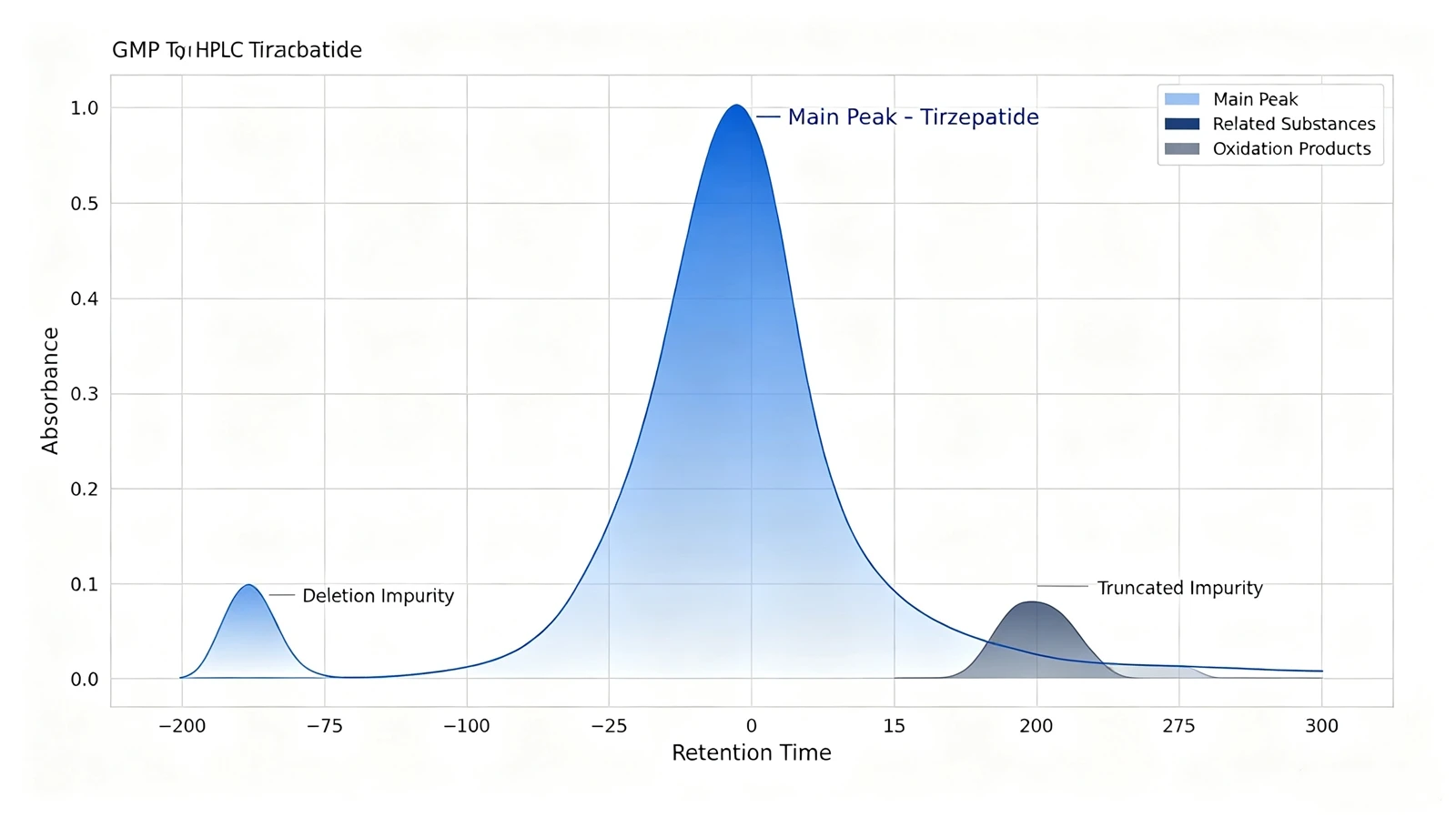
HPLC/UHPLC is the core QC evaluation metric for tirzepatide. Vendors refusing to provide raw, uncropped chromatograms can be confirmed as resellers hiding poor purification results.
Standard HPLC Test Parameters
Column: 300Å wide-pore C4 reversed-phase column (4.6 mm ID)
Detection wavelength: 210 nm
Mobile phase: Water + 0.1% TFA / Acetonitrile + 0.1% TFA gradient elution
Minimum separation cycles: 3 rounds of gradient adjustment
Official 2026 ICH Impurity Thresholds
| Spec Index | Research-Grade | GMP Clinical/Commercial Grade |
|---|---|---|
| Minimum main peak purity | ≥98.0% | ≥98.0% |
| Maximum single specified impurity | ≤0.50% | ≤0.10% |
| Total sum of all impurities | ≤2.00% | ≤1.00% |
| Allowed batch-to-batch fluctuation | ≤2.0% | ≤1.0% |
Mass Spectrometry Identity Confirmation Requirement
Qualified MS data must meet two strict standards:
- Measured monoisotopic molecular weight matches theoretical tirzepatide value within ±1 Da
- MS/MS fragment sequencing verifies complete 39-amino-acid backbone and intact C20 fatty acid side chain
Research-Grade vs GMP Clinical-Grade Specification Comparison
| QC Test Item | Research-Grade (Early R&D / In Vitro Screening) | GMP Clinical-Grade (Preclinical / IND / Biosimilar ANDA) |
|---|---|---|
| Maximum single impurity cap | ≤0.5% | ≤0.1% |
| Residual solvent data | Summary values only | Complete GC chromatogram with peak integration |
| Endotoxin test | Optional | Mandatory, ≤0.5 EU/mL |
| Heavy metal detection | Not required | Mandatory per USP <232> |
| Accelerated stability data | Not required | Full 6-month stability report |
| Batch production records | Basic lot number only | Full raw material, synthesis and purification logs |
| Document signature | Generic digital stamp | Hand-signed QA manager certification |
| Third-party testing | Optional before bulk orders | Mandatory for kilogram-level clinical orders |
Step-by-Step Authentic Tirzepatide COA Verification
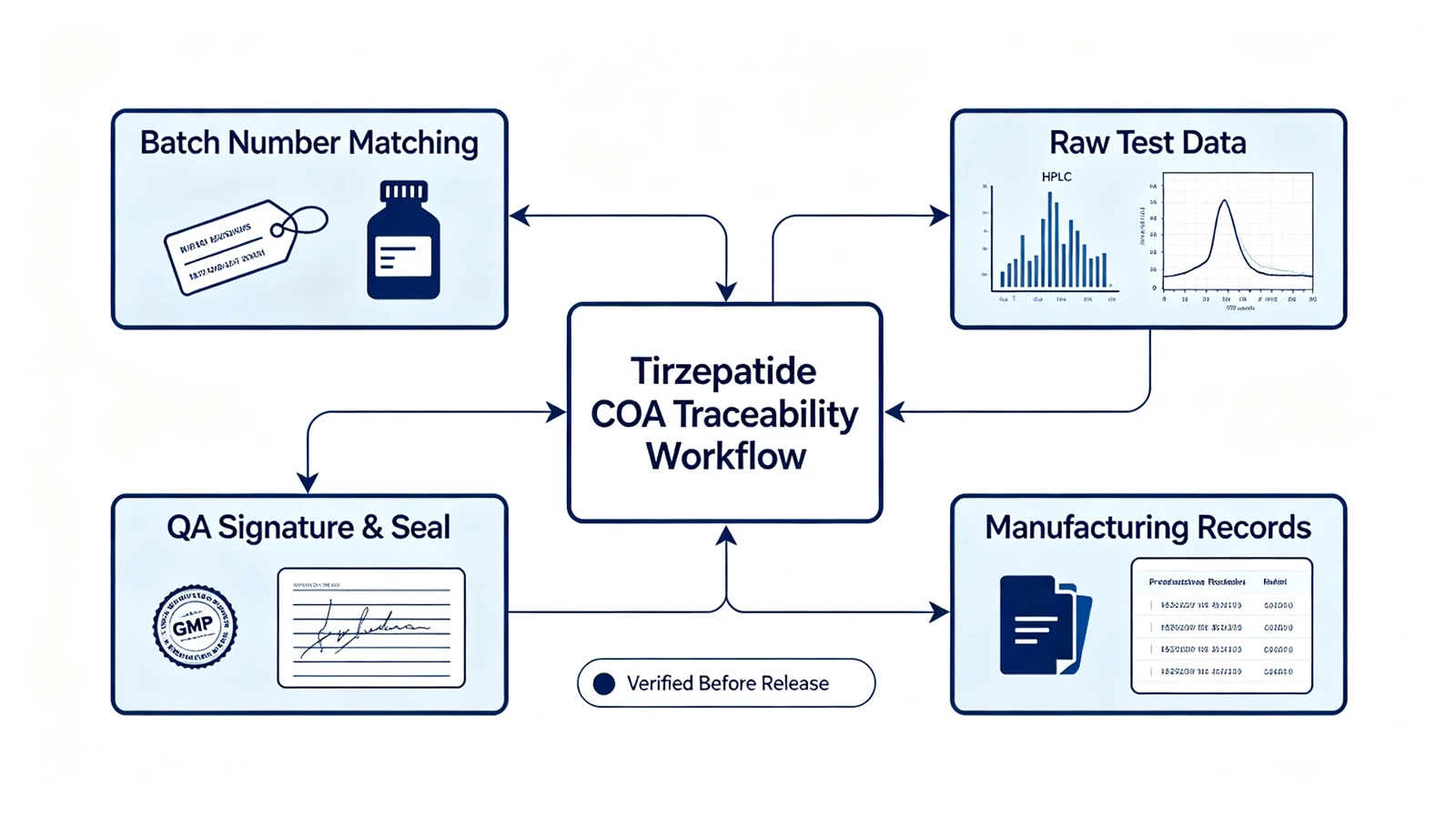
Standard COA Validation Steps
- Cross-check COA batch number against product vial label; zero deviation permitted
- Request original PDF HPLC and MS spectrogram files, not compressed screenshots
- Confirm all 12 mandatory test items from Chapter 3 have specific numerical results
- Verify handwritten QA manager signature and official GMP factory seal
- Compare residual solvent values against ICH Q3C upper limits
Top 10 Fake COA Red Flags
- Refuses to send unedited raw HPLC/MS detection data
- Purity values are fixed round numbers (99.00%, 98.00%) with no normal decimal fluctuation
- Batch numbers on COA and product packaging do not match
- Missing residual solvent, moisture or peptide content results
- Testing date is earlier than manufacturing date
- No official QA signature or GMP factory stamp
- Identical template COA used for all production batches
- HPLC chromatogram lacks labeled, integrated impurity peaks
- MS molecular weight deviates more than 1 Da from theoretical value
- No QR code or unique serial number for online batch verification
4 Key SPPS Impurities & Experimental Risks
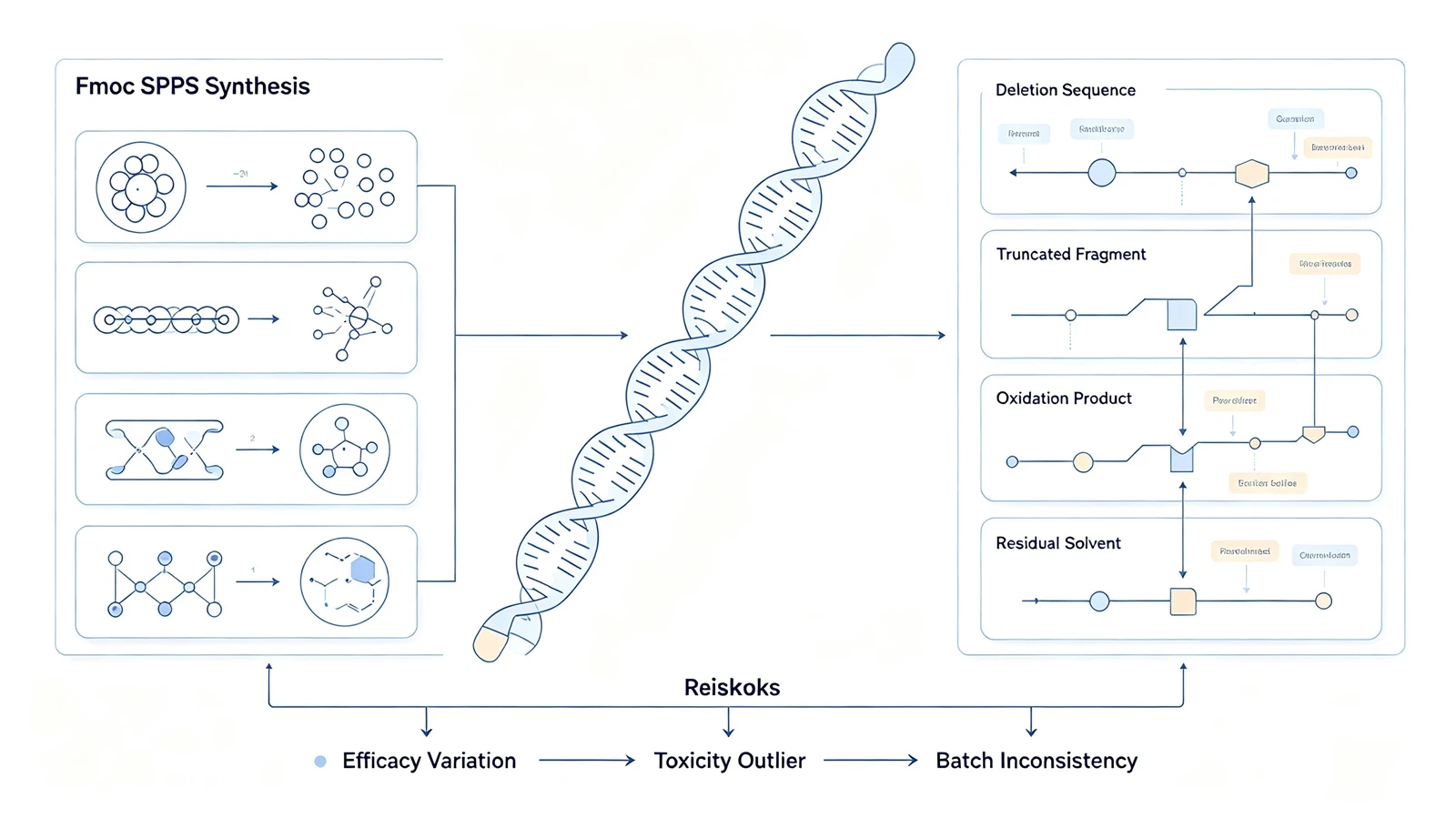
Tirzepatide's 39-amino-acid backbone generates four major impurity categories during Fmoc SPPS synthesis. Manufacturers without multi-round HPLC purification deliver high-impurity material causing irreversible project damage:
- Deletion sequence impurities: Reduce GLP-1/GIP binding affinity, cause inconsistent in vivo PK data
- Truncated peptide fragments: Create off-target receptor binding signals, interfere with control group results
- Oxidation & deamidation degradants: Accelerate API degradation, shorten shelf life
- Residual organic solvents (TFA/DMF): Cytotoxic to cell lines, induce liver toxicity outliers in animal trials
Integrated GMP manufacturers with in-house preparative HPLC control all four impurity types within regulatory limits.
Third-Party Testing Workflow & 2026 Cost Benchmarks
Standard Testing Workflow
- Purchase 50–200 mg test sample from target supplier
- Blind-label samples without disclosing supplier information
- Submit full test panel: HPLC purity, MS identity, residual solvent, moisture, endotoxin
- Compare third-party results against supplier COA; >0.1% purity deviation = high-risk material
- Only authorize kilogram bulk orders after all indicators meet standards
2026 Global Price Reference
Full research-grade QC panel (HPLC + MS): $380–$550 per sample
Full GMP clinical regulatory panel (all 12 items): $900–$1,300 per sample
3-month accelerated stability testing: $2,200–$2,800 per batch
Supplier QC Audit Checklist
Use this standardized checklist during video or on-site audits to rapidly eliminate high-risk vendors:
| Audit Category | Pass / Fail Standard |
|---|---|
| In-House QC Hardware | Equipped with independent UHPLC, LC-MS, GC-FID and Karl Fischer equipment; no outsourced routine testing |
| HPLC Quality Control | Provides complete, peak-integrated raw HPLC chromatograms for every batch on request |
| Impurity Control | Single impurity stably controlled ≤0.1% for all GMP-grade tirzepatide batches |
| COA Management | Issues fully signed, complete official COA for every shipment |
| Batch Traceability | Supplies full raw material, synthesis and purification batch records on request |
| Independent Testing Policy | Accepts blind third-party sample testing before large bulk orders |
| Batch Consistency | Purity fluctuation across 3 consecutive batches kept within ≤1% |
| Regulatory Support | Provides full audit-ready QC documents for IND and ANDA filing |
HDM BIO's ICH-Compliant In-House QC System
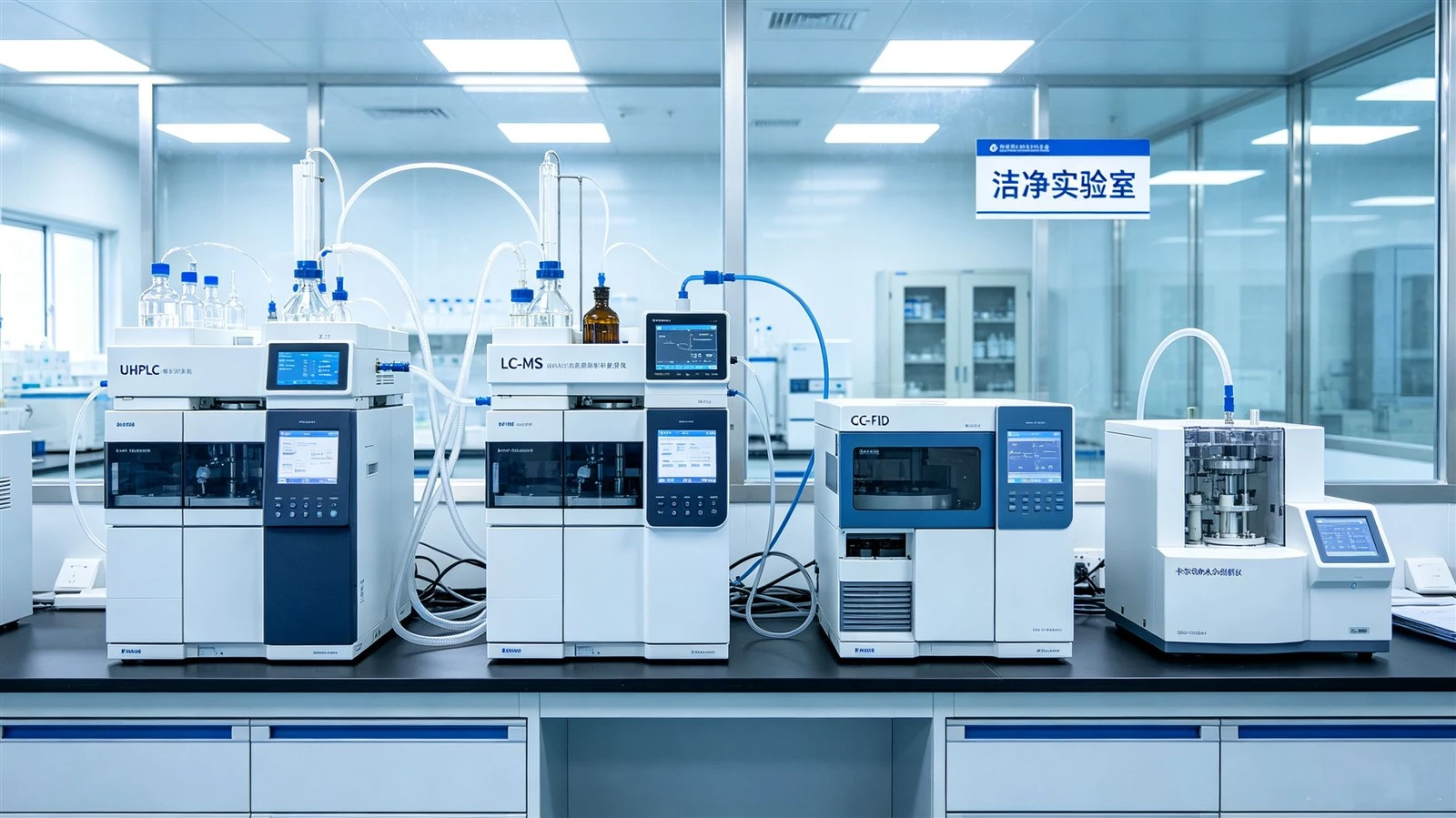
HDM BIO operates an independent GMP-compliant QC laboratory fully aligned with all ICH standards in this guide:
- Dedicated long-peptide UHPLC lines with customized 300Å C4 columns optimized for lipidated tirzepatide
- LC-MS/MS full fragment sequencing for every production batch
- Real-time GC residual solvent monitoring after cleavage and lyophilization
- Mandatory LAL endotoxin testing for all ≥98% GMP-grade shipments
- Permanent digital batch QC archive with unique QR code traceability on every COA
- Proprietary optimized SPPS technology limits batch-to-batch purity variation to ≤1%
Every HDM BIO tirzepatide batch ships with a full QC package: signed COA, original HPLC chromatogram, MS spectrum, residual solvent GC report and batch manufacturing trace summary, fully compliant for global regulatory submission.
FAQ
Q1: Is 99% purity tirzepatide API always better than 98%?
A: No. Complete transparent impurity profiling matters far more than a single rounded number. Many vendors remove impurity peaks from integration to falsely label 99% purity. Qualified 98% material with fully labeled impurities delivers more repeatable results for formal research.
Q2: What QC documents are mandatory for IND filing?
A: Complete signed COA, raw HPLC/UHPLC chromatograms, full LC-MS spectrograms, residual solvent GC data, moisture records, endotoxin report and 6-month accelerated stability data. Trading companies cannot provide this full audit-ready package.
Q3: How to spot suppliers hiding unstable impurity levels?
A: Request COAs from three consecutive batches and compare purity and single impurity values. Fluctuation over ±2% confirms unoptimized production and outsourced purification.
Q4: Do all tirzepatide suppliers provide original MS spectra with COA?
A: Less than 15% of online vendors supply full mass spectrometry raw data. Most resellers only attach simplified single-value COAs without identity verification.
Q5: Why is in-house preparative HPLC capacity linked to QC performance?
A: Tirzepatide requires at least 3 rounds of gradient separation to remove structurally similar impurities. Manufacturers outsourcing purification lose real-time impurity monitoring control.
Related Internal Reading
Core Technical Guide: How Tirzepatide Is Synthesized: Fmoc SPPS Mechanism Explained Step by Step
Supply Chain Analysis: Why Is Tirzepatide API Supply Tight in 2026? Global Manufacturing Bottleneck Explained
Sourcing Audit Manual: How to Choose a Reliable Tirzepatide API Supplier in China (2026 Buyer's Guide)
Final Takeaways
In the 2026 tirzepatide supply shortage, standardized ICH GMP quality control is the most effective risk mitigation tool. Never select raw material based solely on low price or fast delivery. Always complete HPLC/MS document verification, COA authenticity checks and blind third-party testing before placing clinical bulk orders. Prioritize integrated GMP manufacturers with independent full-function QC labs for consistent, traceable, regulation-ready tirzepatide API.
If you need ICH-compliant tirzepatide API with complete QC documentation, contact HDM BIO's QA team to request sample COA packages and schedule a virtual GMP QC lab tour.