




How does retatrutide compare to tirzepatide and semaglutide in core receptor mechanisms?
The core distinguishing factor between the three peptides is the number of metabolic hormone receptors they activate, which directly determines their overall weight loss and glycemic performance.
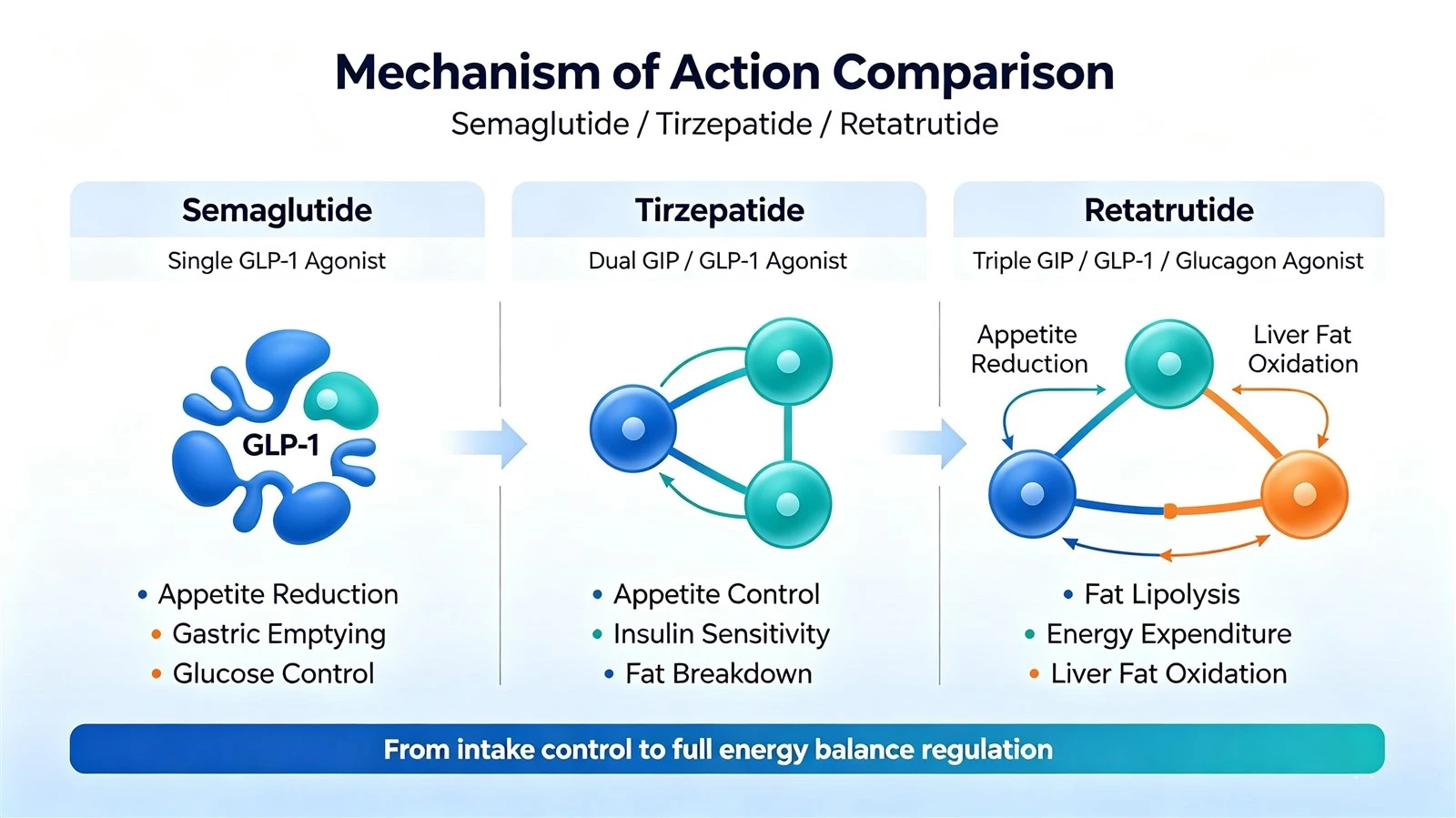
The most fundamental difference between the three molecules is the number and type of receptors they activate, which directly drives efficacy:
- Semaglutide: Single GLP-1 receptor agonist, the most established single-target metabolic peptide therapy.
- Tirzepatide: Dual GIP/GLP-1 receptor agonist, the first approved dual agonist class therapy.
- Retatrutide: Triple GIP/GLP-1/glucagon receptor agonist, first-in-class candidate currently in late-stage Phase 3 development.
What is the difference in weight loss efficacy between retatrutide, tirzepatide and semaglutide?
Retatrutide achieves significantly higher average weight loss than tirzepatide and semaglutide in Phase 3 obesity trials, with no observed weight loss plateau through 104 weeks of extended treatment.
Weight Loss Efficacy
This comparison uses data from each drug's pivotal Phase 3 obesity trial, at the highest tested/approved dose:
|
Drug |
Receptor Class |
Trial Duration |
Average Weight Loss |
Trial Name |
|
Retatrutide 12mg |
Triple agonist |
80 weeks |
28.3% |
TRIUMPH-1 |
|
Tirzepatide 15mg |
Dual agonist |
72 weeks |
~22% |
SURMOUNT-1 |
|
Semaglutide 2.4mg |
Single agonist |
68 weeks |
~15% |
STEP-1 |
When adjusted for similar treatment durations, retatrutide maintains a ~25–30% greater weight loss effect relative to tirzepatide, and nearly double the effect of semaglutide. Notably, retatrutide also showed no weight plateau through 104 weeks of extended follow-up in high-BMI subgroups, a key difference from existing therapies where weight loss typically plateaus after 60–72 weeks.

Which peptide delivers better glycemic control for type 2 diabetes patients?
All three peptides lower HbA1c levels effectively, but retatrutide generates far greater concurrent weight loss in diabetic populations while matching tirzepatide's glucose-lowering power.
Glycemic Control in Type 2 Diabetes
|
Drug |
HbA1c Reduction |
Weight Loss (T2D Population) |
Trial Duration |
Trial Name |
|
Retatrutide 12mg |
2.0% |
16.8% |
40 weeks |
TRANSCEND-T2D-1 |
|
Tirzepatide 15mg |
2.4% |
13.1% |
40 weeks |
SURPASS-1 |
|
Semaglutide 1.0mg |
1.6% |
6.7% |
30 weeks |
SUSTAIN-1 |
All three agents deliver clinically meaningful glycemic improvements. Retatrutide delivers greater weight loss in T2D populations than comparators, with HbA1c reduction on par with leading dual agonists.

Is retatrutide safer than tirzepatide and semaglutide?
Retatrutide carries a nearly identical gastrointestinal side effect and treatment discontinuation risk as tirzepatide and semaglutide, despite its extra glucagon receptor activity.
Safety Profile Comparison
Across all three therapies, the most common adverse events are gastrointestinal in nature, consistent with the GLP-1 drug class:
Common side effects: Nausea, diarrhea, constipation, vomiting - mostly mild to moderate, and concentrated in the dose-titration phase.
Treatment discontinuation rates due to adverse events:
- Semaglutide 2.4mg: ~10%
- Tirzepatide 15mg: ~10–12%
- Retatrutide 12mg: 11.3%
Despite adding a third receptor target, retatrutide does not show a materially higher rate of serious adverse events compared to approved dual and single agonists, based on available Phase 3 data. Long-term cardiovascular safety data for retatrutide is still under ongoing multi-center follow-up.

What are the development and commercial availability differences between the three peptides?
Semaglutide and tirzepatide are fully approved global commercial drugs, while retatrutide remains an investigational Phase 3 compound only available for pharmaceutical R&D API supply as of mid-2026.
|
Drug |
Development Status |
Approved Regions |
Primary Commercial Form |
|
Retatrutide |
Phase 3 clinical development |
Not yet approved |
Investigational API for R&D use only |
|
Tirzepatide |
Approved |
US, EU, major global markets |
Branded injectable formulation |
|
Semaglutide |
Approved |
US, EU, major global markets |
Branded injectable & oral formulations |
Patent status is a key consideration for generic and biosimilar development. Semaglutide composition patents are beginning to expire in select regions, while tirzepatide and retatrutide remain under active patent protection for the foreseeable future.
Which peptide should you select for your pharmaceutical R&D project?

For generic/biosimilar development programs: Prioritize semaglutide or tirzepatide, which have established markets, clear regulatory pathways, and upcoming patent expirations in many regions.
For next-generation innovative formulation development: Prioritize retatrutide, as its triple-agonist mechanism delivers superior efficacy and represents the next wave of metabolic therapy.
For early-stage pilot research with limited budget: Semaglutide API is the most widely available and cost-effective option for proof-of-concept studies.
For MASH/NAFLD focused research: Retatrutide's glucagon-mediated hepatic fat oxidation gives it a unique therapeutic advantage over single and dual agonists.
Retatrutide represents the most advanced metabolic peptide in late-stage development, delivering statistically superior weight loss efficacy compared to both semaglutide and tirzepatide while maintaining a comparable mild safety risk profile across Phase 3 clinical trial data.
Key Takeaways
- Retatrutide delivers statistically superior weight loss efficacy compared to both tirzepatide and semaglutide, with a comparable safety profile in Phase 3 trials.
- Tirzepatide and semaglutide remain the standard of care for approved clinical use, with established supply chains and global regulatory approval pathways.
- For forward-looking long-term R&D pipelines focused on breakthrough metabolic treatments, retatrutide is the most promising next-generation peptide candidate available for research API sourcing.
Disclaimer: This article is for informational purposes only and does not constitute medical advice. All clinical data is sourced from publicly released trial results as of mid-2026. All products referenced are for pharmaceutical R&D and manufacturing use only, not for personal human use or self-administration.